

If you’ve owned a travel trailer through a full Calgary cycle, you already know—this isn’t a passive investment. Between abrupt Chinooks and long idle months, the gap between “stored” and “protected” becomes very real. The difference often comes down to who’s managing the environment, not just providing the space.
1. Reclaiming Access: Designing Space for Ongoing Care
One of the most overlooked frustrations is losing access to your own unit the moment it’s stored. In tighter facilities, trailers sit sealed for months—no airflow, no inspection, no intervention.
Experienced RV Storage Facilities Near Calgary rethink that constraint. For example, with oversized stall configurations (≈12 ft width), it allows critical in-situ servicing protocols like:
- Partial slide-out deployment for system checks
- Routine seal conditioning without relocating the unit
- Safer movement for owners and technicians
Why this matters:You’re not just storing—you’re maintaining in place. That subtle shift prevents moisture buildup and extends the life of moving components that typically degrade in silence.
This is where expertise shows: designing space that supports ownership, not restricts it.
2. Ground Truth: Eliminating Hidden Mechanical Stress
You might not see it immediately, but what sits beneath your trailer often dictates how it performs next season. In Calgary, the freeze-thaw cycle isn’t gentle. It manipulates surfaces in ways that directly affect:
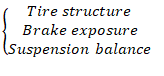
Storage specialists address this with intent:
- Engineered ground systems such as compacted gravel or road mulch
- Drainage-first layouts that prevent pooling around tires
- Load distribution awareness to minimize long-term deformation
Instead of reacting to springtime failures, these facilities prevent them at the ground level. It’s a quiet form of risk management—one that protects both performance and resale value.
3. Rethinking Location: Cleaner Air, Smarter Placement
Here’s something many investors miss: where your trailer is stored geographically can influence how much it depreciates.
Urban storage zones, especially near industrial corridors, introduce constant exposure to:

Forward-thinking operators move beyond convenience with solutions like peripheral siting (e.g., Foothills regions) that offers:
- Reduced contaminant exposure
- More stable airflow patterns
- Lower environmental stress on exterior materials
This isn’t just about aesthetics. It’s about reducing cumulative damage that often goes unnoticed until it’s expensive to reverse.
4. Security That Thinks, Not Just Watches
In RV storage, security isn’t a checkbox—it’s a system. And in this space, systems need both technology and human judgment.
Top-tier facilities layer protection intentionally:
- Controlled gated access to limit entry points
- Continuous video monitoring for traceability
- On-site or local oversight that adds real-time awareness
That last element is where many operations fall short. A camera records—but a trained eye notices.
- A shifting cover
- A soft tire
- An unfamiliar presence
These small interventions often prevent larger losses. It’s not just about theft prevention—it’s about active stewardship of your asset.
In essence, when storage is treated as part of a broader ownership strategy, everything changes. You’re no longer reacting to problems—you’re designing them out. And that’s exactly where experienced operators separate themselves: not in space offered, but in problems solved before they surface.
For further details, check out our websites.